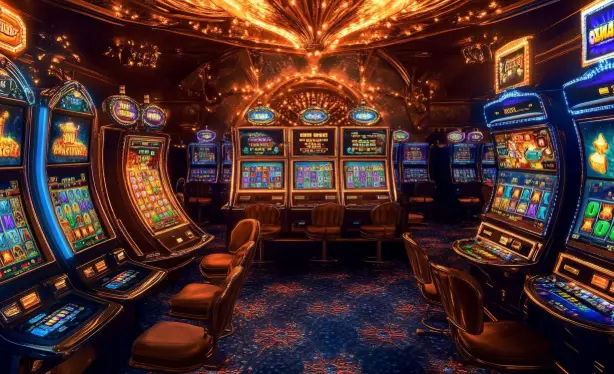
Casino Floor Wayfinding Signage: How Navigate?
Casino floor wayfinding signage fails the moment a player loses orientation inside a 200,000-square-foot gaming pit, and that disorientation is not accidental—it is engineered into the spatial arithmetic. The brutal truth is that most operators treat signage as a decor problem when it is actually a behavioral control mechanism, a load-bearing component of the floor's psychological architecture. Get it wrong and you hemorrhage dwell time, inflate lost-player complaints, and hand your competitors a walking customer.
The Geometry of Deliberate Confusion
Walk a high-roller pit at 2 a.m. and count the sightlines. You will find them broken by column clusters, mirrored ceilings, and low-slung slot carousels positioned to sever any long-axis view. This is not sloppy design; it is casino floor wayfinding signage deployed as a containment system. The overhead blade signs rotate at 30-degree increments so a player circling a bank of machines never gets a fixed bearing. Eye-level directional totems get mounted at 1.4 meters—below the natural scanning horizon—forcing a downward glance that lands squarely on the next bank of cabinets. Every sign is a nudge, not a map.
🔍 The math is unforgiving. A player who cannot see the cage within eight seconds starts scanning for an exit; a player who cannot locate a restroom within ninety seconds abandons the machine. Signage placement must resolve these two vectors without ever delivering a clean straight line to the door. That is the tightrope every floor planner walks.
Zone Coding Beats Directional Arrows
Arrows are amateur hour. The elite layouts use chromatic zone coding—warm amber for the slots cathedral, cold cyan for table games, deep burgundy for the VIP cage corridor. A player learns the palette in under three minutes and navigates by hue memory, not by reading. This matters because casino wayfinding under low ambient light and a 2.4-meter ceiling void destroys text legibility beyond four meters. Color survives where Helvetica dies.
💡 Mount your zone identifiers on vertical fin blades at 2.6 meters, double-sided, with 40% negative space. The human peripheral vision detects the color band first and the icon second—so the icon must be a silhouette, never a wordmark. Slot players in a decision loop do not read; they pattern-match.

Digital Totems and the Refresh Trap
Interactive directory totems look expensive and usually are—but the failure mode is refresh latency. A player taps a wayfinding screen and waits 1.8 seconds for the map to render, and you have already lost them to the bank of machines behind the totem. Static backlit film beats a laggy touchscreen every single time. If you insist on digital, hardwire the render pipeline to sub-400ms and cap the interaction depth at two taps. Anything deeper is a UX crime scene.
Emergency Egress Cannot Be Compromised
Here is where the regulatory auditors sharpen their knives. Revenue-optimized wayfinding must never occlude the fire egress spine. The moment your decorative blade sign block a sprinkler riser or a pull station, you are writing checks to the fire marshal. Run a separate, uncompromised egress layer—photoluminescent strips at 0.3 meters, continuous, unbroken—beneath every aesthetic sign package. The two systems must not share mounting hardware. 🔥
Auditing Signage by Dwell-Loop Telemetry
Stop guessing whether your casino navigation works. Instrument it. Deploy BLE beacon triangulation across the pit and measure the average time-to-destination for cage, restroom, and exit queries. A healthy floor resolves each in under 45 seconds with a standard deviation below 12. If your exit query mean exceeds 60 seconds, your signage is leaking players to the street—and the house edge cannot recover that. Pull the telemetry weekly, correlate it against slot coin-in by zone, and you will find the exact sign that is quietly killing a bank of machines.